How Much Protein Do You Really Need in a Day?
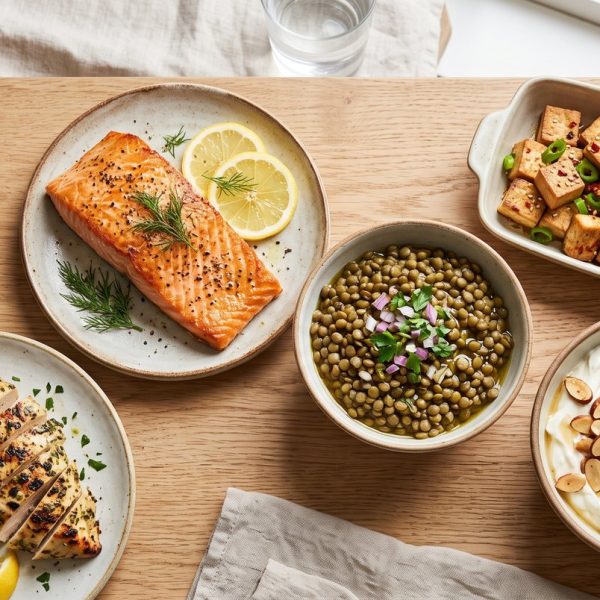
Protein has become the most talked about nutrient in the kitchen, and for good reason. It builds muscle, repairs tissue, keeps you full and quietly runs a thousand small jobs inside the body. Yet the moment you ask how much protein per day you actually need, the advice splinters into a dozen confident answers. The honest reply depends on your body, your goals and how active you are, but the numbers are far less mysterious than the internet makes them sound.
The baseline everyone starts from
Public health bodies set a floor rather than a target. The standard recommendation is about 0.8 grams of protein per kilogram of body weight each day, which works out to roughly 56 grams for an average man and 46 grams for an average woman. That figure is designed to prevent deficiency, not to help you thrive. It is the nutritional equivalent of a minimum wage: enough to get by, but not where most people want to sit if they are training, ageing or trying to lose weight.
How much protein per day for muscle and weight loss
Once you have a goal, the number climbs. Research on active people suggests somewhere between 1.2 and 2.0 grams per kilogram supports muscle repair and growth. If you are lifting weights and want visible results, aiming for around 1.6 grams per kilogram is a sensible and well supported target. The question of how much protein per day to gain muscle rarely needs the extreme figures sold by supplement brands. Past a certain point the extra grams do little beyond making your grocery bill heavier.
Protein also earns its reputation during weight loss. It is the most filling of the three main nutrients, and a higher intake helps protect muscle while you shed fat, so more of the weight you lose comes from the right place.
Can your body only absorb so much at once?
You have probably heard that the body can only use 30 grams of protein in a single sitting. This is one of the most stubborn myths in nutrition. The truth behind how much protein can your body absorb per day is that your gut takes in almost all the protein you eat, just at different speeds. What has a limit is how much your muscles can use for building at any one moment, and that is a separate thing from absorption. Spreading protein across a few meals is useful, but a large portion at dinner is not wasted.
Where good protein comes from
Animal foods such as eggs, fish, poultry, dairy and lean meat deliver complete protein with all the essential amino acids. Plant eaters can hit the same targets with beans, lentils, tofu, tempeh and a mix of grains, though they may need slightly more total protein and a little variety to cover every amino acid. Whole food sources come bundled with fibre, vitamins and minerals, which is why they beat leaning on powders. A varied plate also supports your gut health, and a healthy gut helps you get more from everything you eat.
A simple way to track it
You do not need a spreadsheet to eat well, but if you are curious, learning how to track protein intake for a single week can be eye opening. Most people either fall short or cluster all their protein at dinner. A rough method works fine: aim for a palm sized portion of a protein food at each meal, add a source to your snacks, and glance at the labels on packaged items. After a few days you will start to estimate without thinking about it.
Protein requirements are usually discussed in terms of muscle, but the same building blocks go into skin, hair and nails. That is one reason a damaged skin barrier can take longer to repair in people eating well below their needs. Recovery is limited by materials as much as by routine.
Nutritional advice shifts as the underlying research improves, which frustrates people who want a settled answer. Protein guidance is a good example. Much of that refinement comes out of work funded by biotech companies rather than from dietary studies alone.
One caution is worth keeping in mind. Nutrition guidance travels across borders and languages, and small errors in how a health guide is written or translated can change its meaning, which is why accurate medical and nutrition translation matters when advice moves from one country to the next. What counts as a healthy portion in one national guideline may be described quite differently in another.
Why protein matters more as you age
Protein needs quietly rise with age. From around the age of fifty the body becomes less efficient at turning the protein you eat into muscle, a shift researchers call anabolic resistance. At the same time, muscle naturally declines, which affects strength, balance and independence later in life. Older adults who spread a decent amount of protein across each meal, alongside some resistance exercise, hold on to muscle far better than those who coast on the old minimum. If you are over fifty, the lower end of the range is rarely enough, and nudging your intake upward is one of the simplest things you can do for long term health.
The bottom line
Most healthy adults do well somewhere between the bare minimum and roughly double it, adjusted for age, activity and goals. If you want a single starting point, aim for protein at every meal and let your appetite and your results fine tune the rest. For the underlying science, the overview of protein as a nutrient on Wikipedia and the practical guidance from the Harvard T.H. Chan School of Public Health are both reliable places to read further. Protein matters, but it is one part of a plate, not the whole meal.